This is default featured slide 1 title

Go to Blogger edit html and find these sentences.Now replace these sentences with your own descriptions.

This is default featured slide 2 title

Go to Blogger edit html and find these sentences.Now replace these sentences with your own descriptions.

This is default featured slide 3 title

Go to Blogger edit html and find these sentences.Now replace these sentences with your own descriptions.

This is default featured slide 4 title

Go to Blogger edit html and find these sentences.Now replace these sentences with your own descriptions.

This is default featured slide 5 title

Go to Blogger edit html and find these sentences.Now replace these sentences with your own descriptions.

Friday, November 16, 2012

Dublin is one of the riskiest cities for cybercrime - JOE


JOE


Dublin is one of the riskiest cities for cybercrime
JOE
However, the good news is that researchers said the cities with the greatest cybercrime risk factors did not necessarily correlate with the highest computer virus infection rate. Researchers said that this reflected “the fact that many consumers are ...
Dublin sixth riskiest online city, survey saysSiliconrepublic.com

all 6 news articles »

Monday, November 12, 2012

What You Should Expect From Windows 8

What you should expect from Windows 8? Get My Early insights and opinions into Microsoft's upcoming Windows 8 Consumer Preview should give IT departments and consumsures a lot to chew on and contemplate when the Windows 8 Arrives.
With the Windows 8 Consumer Preview beta edition just around the corner, now is a good time to examine what we know and don't know about Microsoft's forthcoming OS, and what IT should look for when the Consumer Preview hits as expected on Feb. 29.

Windows 8 rates as Microsoft's latest bet-your-company move, with the computer industry rapidly adopting mobile platforms. For Windows 8 to thrive in the corporate environment, however, it has to not only add important new capabilities to today's Windows 7 desktop but also morph into a touch-enabled, highly portable, secure OS that IT can tolerate and users will love.

Putting Windows 8 Consumer Preview into perspective No doubt you've already banged around the Windows 8 Developer Preview, and your clicking finger is poised to get the Consumer Preview bits as soon as they appear. But it's worthwhile to step back and take a look at what will, and won't, be happening at the end of the month.

Microsoft isn't trying to convince you to upgrade all of your Windows PCs to Windows 8. Quite the contrary -- last week, Microsoft's general manager of investor relations, Bill Koefoed, gave a short talk at the Stifel Nicolaus Technology & Telecom Conference (video and transcript), where he said, "One-third of businesses have upgraded to Windows 7. ...

For the enterprise, the path to Windows 8 is through Windows 7." Microsoft is far more interested in getting all of your PCs on Windows 7 than they are on pushing your PC users to Windows 8. I have a feeling that's going to come through loud and clear in the Windows 8 Consumer Preview.

"Consumer preview" is a bit of a misnomer anyway. This is a reasonably stable, mostly feature-complete build of Windows x86/x64, where the user interface isn't locked in concrete, and that's it. Microsoft is way beyond the point where substantive changes can be made. Online comments and extensive eavesdropping -- "telemetry" in Microsoft parlance -- may lead to some interface changes. But the plumbing is already in and won't be altered.

The version of Windows 8 that has gotten the most recent buzz, Windows on ARM (WOA) will go out to a very select few; there isn't even a hint of when we unwashed masses will get to see them. We do know that Qualcomm, Nvidia, and Texas Instruments are working on WOA devices -- likely tablets but perhaps touchscreen netbooks as well.

WOA won't have the Windows 7 "desktop" part of Windows 8, so it won't run the familiar Windows Explorer or existing (Win32s) Windows apps. It just runs the Metro UI, a touch-oriented operating environment for lightweight applications, and apps designed specifically for Metro -- sort of like how Apple's iOS is the separate-but-related, light counterpart its Mac OS X. Of course, x86-based PCs get both the Windows 7-derived "desktop" and Metro, whereas Macs can run Mac OS X but not iOS.

What to expect from the Windows 8 user interfaceIf you've been looking at the Developer Preview, you know all about Windows 8's Dr. Jekyll and Mr. Hyde interface(s).

You've seen the touch-oriented Metro interface with tiles in reorganizable groups, where the faces of the tiles change programmatically and you can pinch to zoom out to view all of the tiles at once ("semantic zoom"). In the Consumer Preview, Microsoft promises we'll be able to create and name new groups, drag groups, change the background color and style, turn big tiles into little tiles, and use the mouse (not just our fingers) for all sorts of navigational actions, including semantic zoom.

There are several minor changes in the way you swipe and click, particularly with the charms bar (Search, Share, Start, Devices, Settings) on the right. These changes are largely cosmetic, but if you're thinking about deploying a Metro app -- especially a Metro app that has to live in a mouse-friendly world -- they could be crucial.

Also on the Metro side of the fence, the current, reprehensible App Search behavior changes: Instead of Search splatting an alphabetized list of all your applications on the screen, as the Developer Preview does now, the Consumer Preview arranges them by groups. You'll probably want to work with it a bit, try rearranging and renaming groups, and see if your users can live with the new tools at hand.

On a "legacy" Windows 7-based PC (a loathsome term), more changes are in store. It still appears as if all Windows 7 apps and drivers will just work on Windows 8 PCs -- that is, desktops and laptops using Intel or AMD x86 CPUs.

That's certainly the goal, anyway. In the Consumer Preview, we'll see a few changes: an improved Task Manager with more details and app startup tweaking; the new Windows Explorer ribbon won't appear by default as it does in the Developer Preview (yes, Explorer will still have the "up one level" button, as well as the Open Command Prompt menu item); a few long-overdue tweaks to the copy and move dialogs. They're all worth a look, though nothing's really compelling.

The big change in the "legacy" PC version is the Start button. In the Developer Preview, clicking on the Start flag (it wasn't really a button) switched you to the Metro interface. Apparently the Consumer Preview does away with the button, but not the behavior.

As I explained recently, the overriding problem is that the "legacy" Windows desktop doesn't have a "legacy" Start menu. A small cottage industry has grown up with registry hacks and lightweight programs to bring back the Start menu in the Developer Preview. Will Microsoft make it easy for admins and users to unlock the menu in the Consumer Preview?

What has changed beneath the Win8 covers When you're going through the Consumer Preview, be sure you check the new features with your current environment -- and sound off if you hit any snags. Here are some potential sticking points.

Virtualized storage -- called Storage Spaces in Windows 8 -- brings fully redundant backup and easily extensible disk pools to any Windows 8 client system with two or more hard disks. It's a brilliant concept, popularized in Windows Home Server's Drive Extender, now adapted for Windows 8 clients.

When the Consumer Preview arrives, you should spend time testing it with your corporate data backup routines. Although there shouldn't be any problems, it's a very new way of interacting with clients.

Much has been made of Windows 8's new refresh and reset capabilities -- analogous to a wipe command on a tablet or smartphone. Reset completely erases the client computer and reinstalls Windows.

Refresh is supposed to keep personal data and settings, retain Metro apps, and reinstall Windows. It isn't clear at this point precisely which personal data and settings are kept in a refresh -- and whether everything is obliterated in a reset. Make sure your apps survive.

All new PCs with the "Made for Windows 8" sticker must implement Secure Boot, a UEFI option that may bring you grief if you have users who need dual-boot capabilities.

Secure Boot enforces electronic signature checking on operating systems before they're loaded. Windows 8 will pass muster, but other OSes may not. Most -- but not necessarily all -- x86/x64 "Made for Windows 8" PCs will have an override capability. WOA devices will be able to boot only into Windows 8 Metro.

The SkyDrive cloud storage service is due for a major makeover in the Consumer Preview, and part of the change involves single sign-on with a Windows Live ID. There are significant security implications as developers can "enable single sign-on and access a user's data on SkyDrive to make your Metro style app more personal -- with the user's consent, of course," as Microsoft puts it. Of course.

The Consumer Preview will give us the first glimpse of Microsoft's Windows Store. There's a particular twist here for the enterprise IT: The only way consumers can put Metro apps on their PCs and devices is through the Windows Store. (The only way WOA owners can put any apps at all -- or drivers -- on their devices is through the Windows Store.)

At the Build conference last September, Windows president Steve Sinofsky said that businesses would have a private area in the store, which would dish out corporate apps, but only to authorized machines. We haven't seen any details of exactly how that's going to work -- and it'll be an important question for all corporate developers.

Microsoft has put us on notice that we'll see better and faster connections to Wi-Fi and other mobile networks, more adept power conservation, new and much more touch-friendly picture passwords, Windows to Go for running Windows 8 (presumably x86/x64) from a USB drive.

Some of those may apply to your shop. Hyper-V will be available on x86/x64 machines, but it isn't clear whether the Consumer Preview version is in any way different from the Developer Preview version in that regard.

What the Windows 8 Consumer Preview means for IT From an IT point of view, the Consumer Preview should give you a very good idea of where your x86/x64-based applications will evolve in the near future on "legacy" PCs.

The Consumer Preview will also show you how Metro's going to work -- or how it won't work -- with WinRT-based apps you're thinking about developing. (WinRT is a new type of app using the Windows Runtime for portability between x86/x64 and ARM platforms.)

Microsoft continues to promise that WinRT apps will be transportable from the x86/x64 version of Windows 8 to WOA, so the strengths and weaknesses you see in Metro in the Consumer Preview edition should carry over to both x86/x64 and ARM platforms.

Sinofsky has stated, definitively, that the only applications allowed to run on the WOA desktop are four Office 15 apps -- Word, Excel, PowerPoint, and OneNote -- and a small handful of Microsoft apps, including Internet Explorer 10 and Windows File Manager. That's it. Per Sinofsky, "WOA does not support running, emulating, or porting existing [Win32s] x86/64 desktop apps." Period.

If you have hopes of developing an app that will run on cooler, lighter, cheaper, battery-miserly ARM devices, you'll have to write it Metro-style. Or if you can get it to run under Remote Desktop Services, it may be compatible with Internet Explorer 10 on a WOA device -- maybe.

The differences in Internet Explorer 10 between WOA and x86/x64 may drive your Web programmers nuts. IE10 runs on the Metro and desktop interfaces on both x86/x64 and WOA hardware. That's four different versions of IE10. Plug-ins won't work on three of the four combinations: They're banned on everything except the "legacy" version of IE10 running on x86/x64 hardware.

If your site requires a plug-in, and a user comes at the site using Metro on an x86/x64 PC, they'll be notified of the need for the plug-in and given a one-touch option to flip over to the legacy desktop version of IE10. But if the user has a WOA tablet, there's no option: They're dead in the water, like most other mobile users.

Which is probably just as well. No more Flash. No more PDF plug-ins. No more ActiveX. I'd be hard-pressed to say which of the three has led to more infected Windows PCs over the past decade.

One final note on testing: You're going to want a touch-enabled tablet to test Metro, even for the x86/x64-only Consumer Preview. Using touch is very, very different from mousing your way around. Although Windows 8 -- both Metro and the legacy environments -- will run on any monitor with a resolution of 1,024 by 768 pixels or higher, your PC must support 1,366-by-768 resolution or higher to get all Metro features to work.

In particular, if you want to use Windows Snap -- Microsoft's facility for helping apps run side by side -- to get a Metro window and a second window displayed next to one another, you need 1,366-by-768 resolution or better. Quoting Sinofsky again: "The resolution that supports all the features of Windows 8, including multitasking with Snap is 1,366 by 768.

We chose this resolution as it can fit the width of a snapped app, which is 320 pixels (also the width designed for many phone layouts), next to a main app at 1,024-by-768 app (a common size designed for use on the Web)."

Beyond the Windows 8 Consumer Preview: The great unknown Over the past year we've gone through layers and layers of rumors, particularly about Windows 8 on ARM. Features come and go. Perhaps the most egregious example is in a video made at the Build conference last September. It shows Roger Gulrajani, from the Windows Hardware Ecosystem group, demonstrating Flash running in IE10, on the desktop, on an ARM device.

Now, we're assured IE10 won't run Flash on ARM devices. That much has changed in just four months. Or maybe Microsoft itself was confused and got it wrong; there were several such misstatements at Build, and you can expect confusion to continue given the addition of ARM support for just part of the complete Windows 8 experience.

And I haven't even touched on Office 15. We know very little about it, except Sinofsky has promised, "WOA includes desktop versions of the new Microsoft Word, Excel, PowerPoint, and OneNote. These new Office applications, code-named 'Office 15,' have been significantly architected for both touch and minimized power/resource consumption, while also being fully featured for consumers and providing complete document compatibility."

Will all WOA devices ship with Office 15? If so, as full versions or ad-supported giveaways? At an extra cost or free? For that matter, will x86/x64 Windows 8 PCs ship with Office 15, or a stunted relative? I Dunno You Tell Me!?

ASUS CM1740-US-2AG Desktop Repair Guide

What you can get for $500 keeps getting better and better every year and the ASUS CM1740-US-2AG is certainly a nice step up from the model just six months ago. 

This is a good all around system thanks to its quad core AMD processor, 8GB of memory, dedicated graphics and wireless networking. 

It may not be as fast as an Intel based desktop at this price range but it still provides more than enough for the average user. 

The one downside is that the power supply does limit the potential to upgrade the graphics even further for those looking to get a low cost gaming setup.

Pros

Dedicated Graphics Card
8GB Memory
Wireless Networking

Cons

Processor Slower Than Many Dual Core Intel Based Systems
Low Wattage Power Supply Limits Graphics Upgrades
Description

AMD A8-3820 Quad Core Desktop Processor
8GB PC3-128000 DDR3 Memory
1TB 7200rpm SATA Hard Drive
24x DVD+/-RW Dual Layer Burner
AMD Radeon HD 7470 Dedicated Graphics Card With 1GB Memory
5.1 Audio Suuport
Gigabit Ethernet, 802.11b/g/n Wireless
Two USB 3.0, Six USB 2.0, HDMI, DVI, VGA, 6-in-1 Card Reader
Windows 7 Home Premium, Office Starter
Review - ASUS CM1740-US-2AG

Aug 20 2012 - The ASUS CM1740-US-2AG is extremely similar to the CM1720-US-2AF that I reviewed six months ago. It uses the same base components with a few minor upgrades. The processor has been upgraded from the AMD Fusion A6-3620 quad core processor to a slightly faster A8-3820 quad core processor. 

In addition to the processor, the memory was upgraded for 4 to 8GB of DDR3. This is one of the largest capacities you will see in this price range and provides it with the extra boost it needs for dealing with multiasking which is one of the key benefits from the four cores. There are even four memory slots so the RAM can be upgraded further if needed. It should be noted though that in many tasks, the A8 processors still falls behind many of the Intel dual-core processors. Still, for the average user, this should provide it with more than enough performance for the web browsing, media viewing and productivity software.

Storage features for the ASUS CM1740-US-2AG remain unchanged from the 2AF model I looked at six months ago. It features a one terabyte hard drive that provides it with a large amount of space for applications, data and media files. This is typical now for most desktop in this price range. The drive does spin at the full 7200rpm spin rate which does give it a slight speed advantage over those that use the green class drives. If you need addition space, there are two USB 3.0 ports available for use with high speed external hard drives. This was pretty unique six months ago but many more computers now features these ports. A standard dual layer DVD burner is included for playback and recording for CD or DVD media.

The big difference between this system and the last model I reviewed is the graphics system. The AMD A8 processor does feature an integrated Radeon HD 6550D which is a very good system that offers some decent 3D performance and a step up from what the A6 had. What ASUS has done though is include a dedicated AMD Radeon HD 7470 graphics card. This is still a relatively low end graphics card that won't do much beyond basic 3D but it does have the ability to run in a CrossFire setup with the internal graphics to offer even better 3D performance. 

Now, it isn't going to be as good as a midrange card and it does have its quirk in certain programs. This also offers improved acceleration for non-3D applications which is becoming more useful. The graphics card can be swapped out for a higher model but it is still restricted by the relatively low 300 watt power supply.

For those that already have a wireless network setup in their home for use with mobile devices, the CM1740-US-2AG does come with a 802.11b/g/n wireless networking adapter. This makes it easy to setup the system without needing to stretch an ethernet cable between the desktop and your broadband connection.

In terms of the competition for ASUS, the closest desktop system in the $500 price range would be the Acer Aspire AM3450-UR10P. That system offers an eight core processor for additional performance but comes with less memory. While it also features a dedicated graphics card, it falls short of this ASUS system with its newer 7000 series card and the ability to work with the integrated graphics core.

Thursday, November 8, 2012

My HP Pavilion DM1-4010EZ Installing Linux Mint 12 Experience

When we last left off working on our lovely new HP DM1-4010EX Sub Notebook, I had just finished installing and configuring Microsoft Windows 7 Home Premium.

Now with the windows operating system out of the way it is time to move into installing a real computer operating system on it, and for the sake of variety the choice this time will be Linux Mint 12 and Cinnamon 1.1.3.

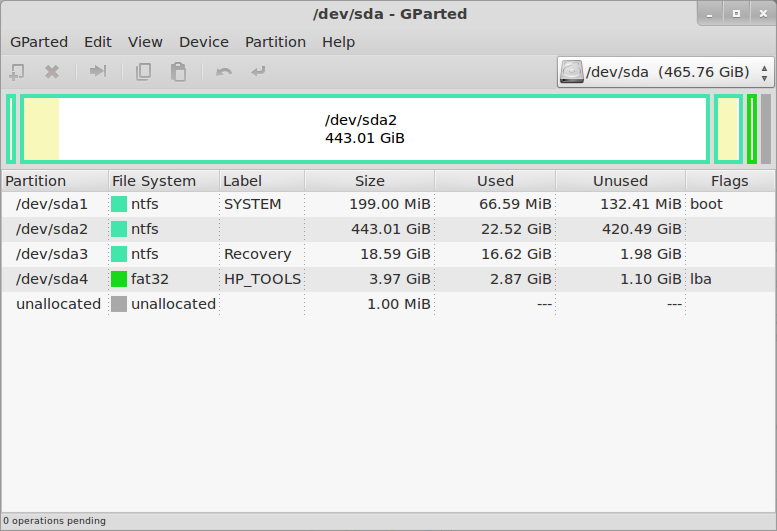
The very first thing to do is prepare the internal hard disk drive. As I said in the previous post, all four of the Primary Partitions are used in the default configuration of this system.

The disk layout looks like this in GParted:
HP Pavilion dm1-4010ez
So there is a tiny bootloader partition, a huge Windows C: partition, a small Windows Recovery partition, and a very small HP Tools partition. One of them has got to go, because the antiquated MBR disk labeling/management system can not have more than four partitions.

I will say this one more time... Make Sure You Have Created A Set Of Recovery DVDs. Once you delete the Recovery partition, you will never have another chance to create them.

The other consequence of deleting the Recovery partition is that you can not do the F11-Recovery procedure, if you ever really need to restore Windows you will have to do it from the DVDs.
Now we are ready to delete a partition. The obvious candidate is the Recovery partition, both because of its size and content (we know we have it copied on DVD).

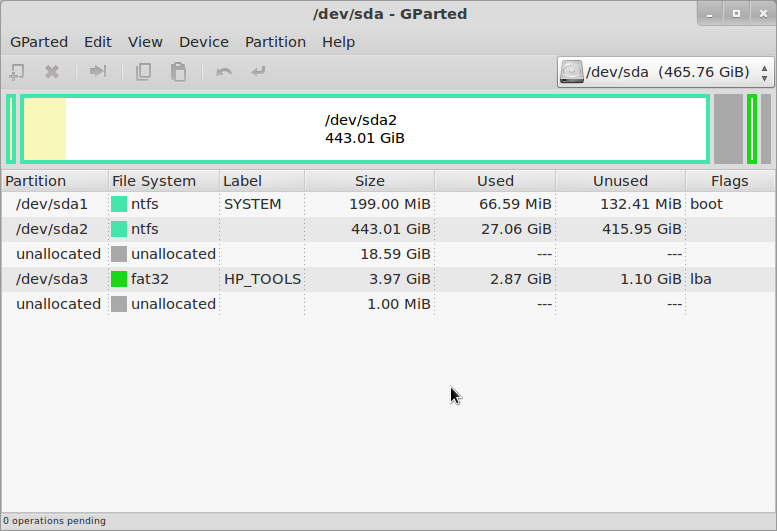
The simplest and most direct thing to do is to delete it in GParted, since we already have that running. But in this case it is probably better to go back to Windows and delete it using the HP Recovery Manager, so that it knows that the partition is gone. Either way you do it, once the partition has been deleted the disk will look like this in GParted:
HP Pavilion dm1-4010ez
Although it is quite small, that is actually enough free space to load Linux - especially if you are only "sticking your toes in the water" at this point, and want to see how it goes.

If you want more space you can just shrink the Windows partition (/dev/sda2). The next step is to create an Extended partition in the free space, and then either create two more logical partitions within that for the Linux root and swap, or just leave the extended partition empty and let the Linux installer create the partitions it wants.
It's finally time to actually install Linux Mint 12.

Download the ISO image from the Linux Mint Downloads page. I just about always use the 64-bit images now, but of course you can still use 32-bit if you want or need to, or if you are just extremely conservative. The ISO image can be converted to a bootable USB stick using the "Startup Disk Creator" utility on any running Mint 9/10/11 system, or of course it can be burned to a DVD-R (sorry, too big for CD-R).

Insert the USB stick or connect the USB DVD drive, turn on power and press F9 (the boot device selection key for HP systems). When booting from USB stick, it still stops with an error about the vesamenu not being a COM32R image, and then says "boot: ". Sigh.

I wish this didn't happen, because it confuses an awful lot of inexperienced users. All you have to do is type "live" and press return, but figuring that out can be daunting. I haven't tried burning a DVD for Mint in a long time, does this still happen when booting that way as well?
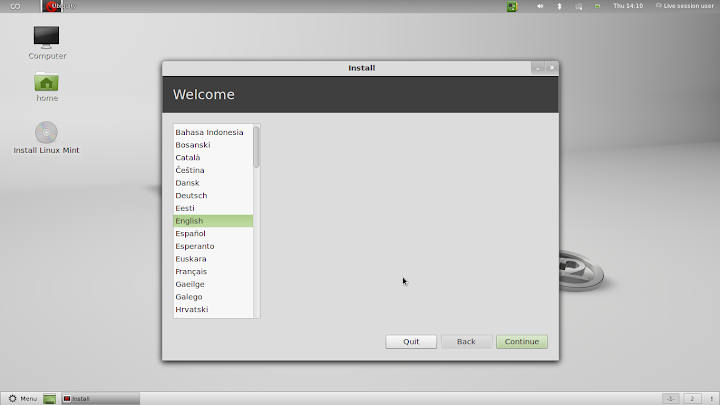
The Mint Live system then comes up, and you will be presented with a normal Mint 12 desktop. One of the icons on that desktop is "Install Linux Mint", which gets you to the Mint installer (duh). The first installer screen asks for the language, which will be used for this installation dialog and as the default for the installed system.
HP Pavilion dm1-4010ez
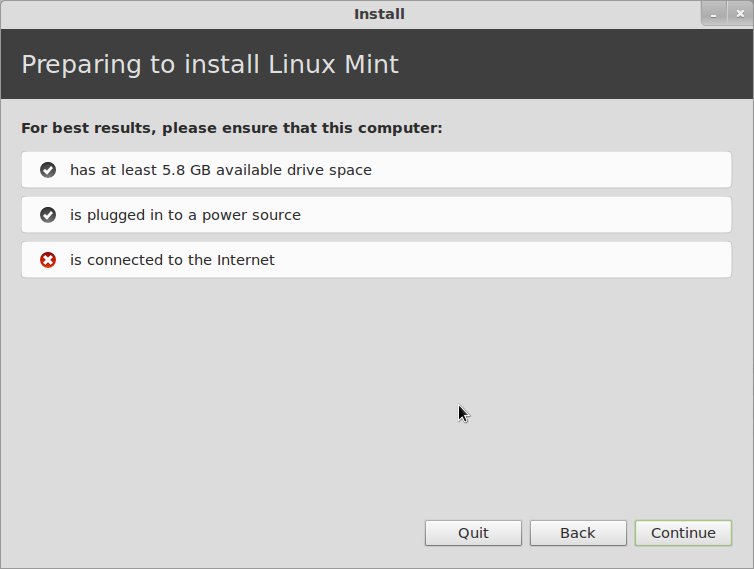
The next screen informs you of the status of disk space, power and Internet connection. You can do the installation just fine without an internet connection, but you really should have power connected, or at least be sure that the battery is full when you start. It's not much fun to have the system die halfway through the installation.
HP Pavilion dm1-4010ez
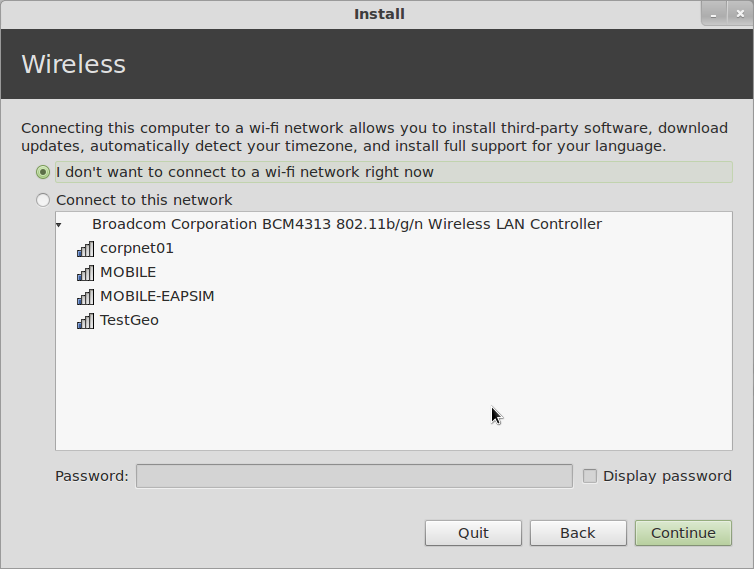
Next you get a chance to connect to a wireless network. This is useful if you want to install updates or additional packages during installation, but as I said it is not absolutely necessary, and I seldom bother with it.
HP Pavilion dm1-4010ez
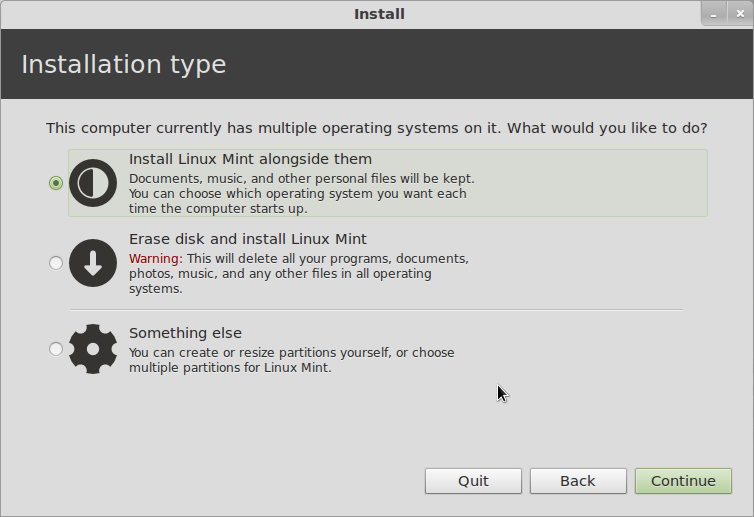
Now comes "Installation Type", which is where you define the disk allocation. If you just created an Extended Partition and left it empty, you can leave this on "Install Linux Mint Alongside Them" and it will do what is necessary. If you like to control things, you can choose "Something Else", which is what I typically do. If you want to ditch Windows and have only Linux installed, choose "Erase disk...".
HP Pavilion dm1-4010ez
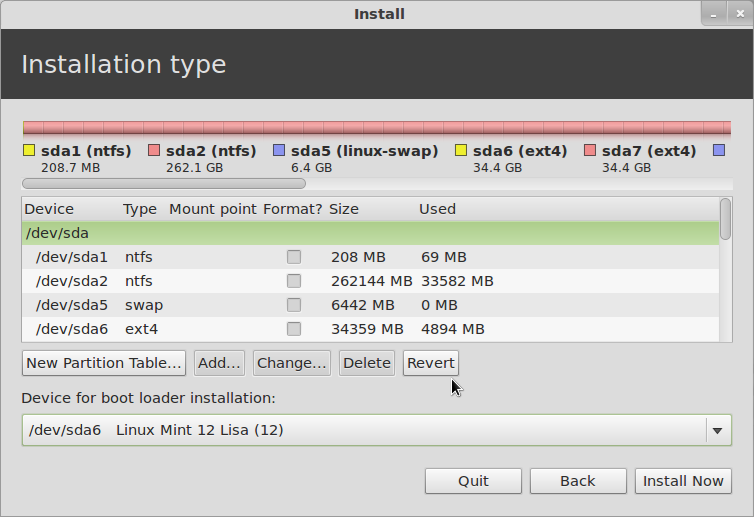
Next you can decide if you want to use the Windows bootloader or Linux GRUB. At the bottom of the window, if you leave the Device for bootloader installation on its default (which is the MBR of the hard drive), you will get Linux GRUB for a bootloader, with Windows listed as a boot option. If you change this to put the bootloader in the root partition of the installed system, you will still have the Windows bootloader, and you will have to follow the instructions I posted a while back to configure that to multi-boot Linux as well.
HP Pavilion dm1-4010ez
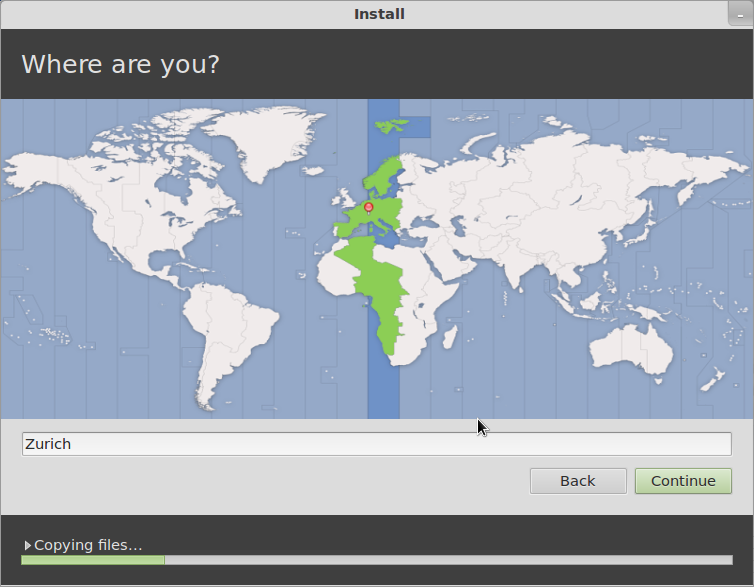
At this point the installer will actually split off and start doing the installation in the background while it continues to ask you a few more questions about the configuration. First is your time zone:
HP Pavilion dm1-4010ez
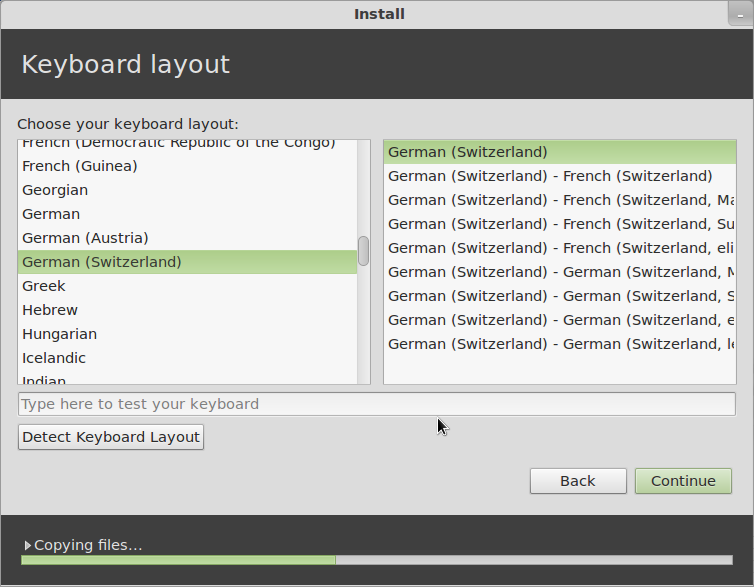
Then comes the keyboard layout...
HP Pavilion dm1-4010ez
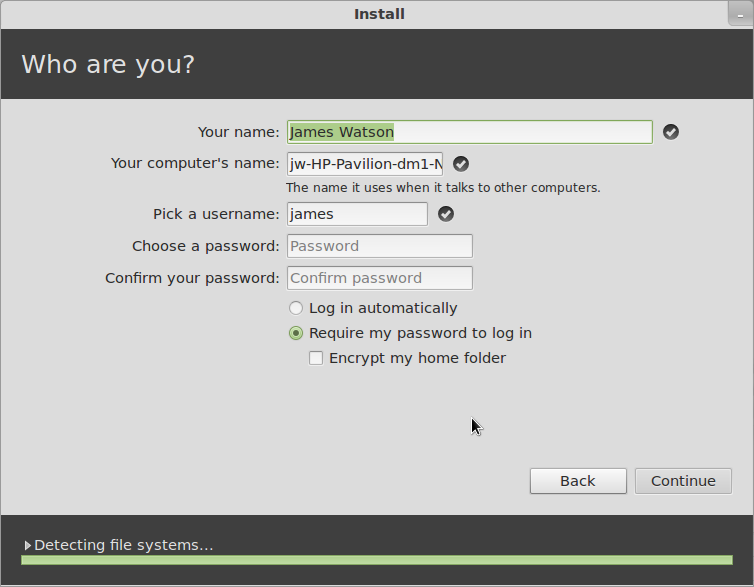
Then comes a series of screens for the the user information.
HP Pavilion dm1-4010ez
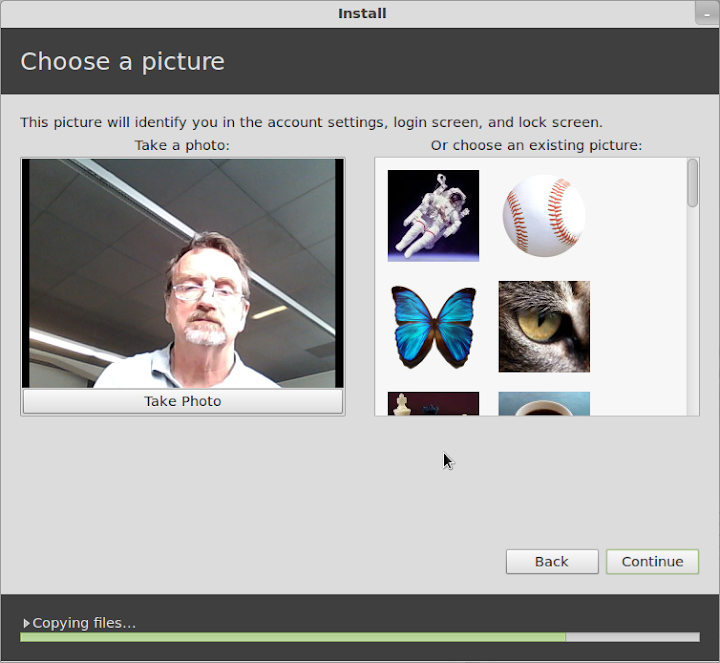
You get to choose a picture for your account - if there is anyone here who really feels that whatever random picture might be taken by the webcam while you are installing is something you might like to have on your account permanently... well, congratulations, you are doing better than I am...
HP Pavilion dm1-4010ez
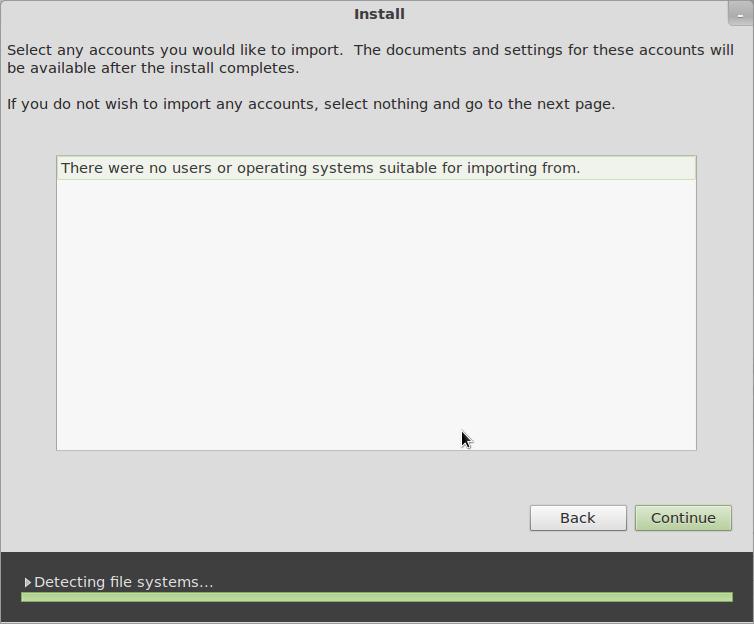
If there is anything else already on the disk that the Installer recognizes and might take over user account information from, it comes up in the next screen.
HP Pavilion dm1-4010ez
Once you have gotten this far, you will get some entertaining propaganda screens while the installation finishes. Hooray! When the installation finishes, reboot (and configure the Windows bootloader if you need to), and you'll be up and running Linux Mint 12.
That might seem like quite a long process, but each of those steps only takes a short time, and the entire installation can be done in 30 minutes if you are reading everything very carefully and thinking about the answers, or as little as 15 minutes or less once you are familiar with it and you're doing it on "autopilot".
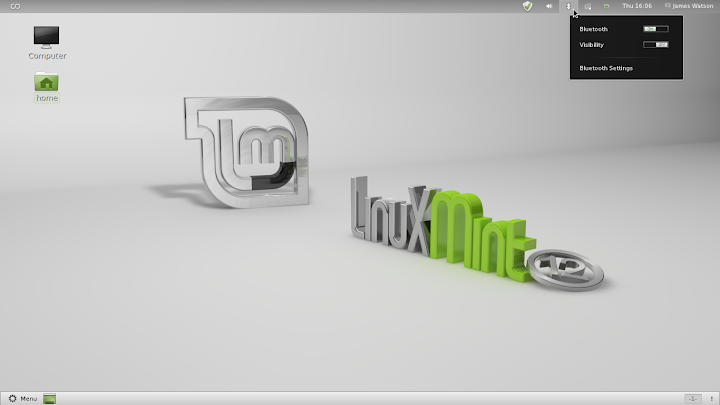
Now comes the good news - it works! As far as I can tell, with one small exception, everything works very nicely. Screen resolution is correct (1366x768), wired and wireless networking are ok (although the signal strength looks weak, as it did under Windows), the touchpad works just fine (SO much better for my nerves than the ClickPad), the Fn-keys for brightness, audio and WiFi control, Suspend/Resume (and it does each of those in less than 5 seconds), Mobile Broadband with my Huawei USB dongle... the only thing I have noticed which doesn't work is Bluetooth.

This is a bit of an inconvenience for me, because I sometimes use a bluetooth mouse or printer, but it is certainly not a big deal. By the way, in addition to showing the default Mint 12 desktop, I'll include the simplest way to tell if Bluetooth is working. It seems to me that the Bluetooth icon used to not show up in the panel if Bluetooth wasn't actually available, but now it looks like it is always there - perhaps this is something new with Gnome 3, I haven't really cared enough to look into it yet.

But if Bluetooth is actually available and working, when you click on the Bluetooth icon you will get options for "Send files to device..." and "Set up new device...". If you don't see those, as in the screen below, then Bluetooth is not available, so don't waste a lot of time tearing your hair out trying to figure out how to add a Bluetooth device, as I did, when Bluetooth isn't working at all.

I expect this problem to be taken care of by an update in the near future.
HP Pavilion dm1-4010ez
So, there you have it. I hope all of the detail was worthwhile - I'm certainly not going to be doing this on a regular basis, but I really wanted to show that installing Linux, whether it be openSuSE, Mint, or any of the other popular distributions, was not black magic, and really wasn't even all that difficult or dangerous.

What we have ended up with here is a very nice sub-notebook, it looks good, feels good, works well, and when we turn it on we can choose whether to run Linux Mint 12 (loud cheers in the background) or Windows 7 Home Premium (boos and hisses, and I am ducking lemons and rotten tomatoes being thrown from the cheap seats).
Next on the agenda: add the Cinnamon desktop, and compare it to Gnome and MGSE.

Tuesday, November 6, 2012

Lighthouse Security Group Expands Operations to Support its Proven Cloud

Lighthouse Security Group Expands Operations to Support its Proven Cloud Alternative to Traditional Identity and Access Management Systems

Company sales, marketing and product expansion to support continued success of Lighthouse Gateway™ cloud-based IAM platform
February 15, 2012 09:03 AM Eastern Time

LINCOLN, R.I.--(EON: Enhanced Online News)--Led by cloud-based identity and access management (IAM) pioneer Eric Maass, Lighthouse Security Group today announced expanded operations to support the launch of the next generation of its Lighthouse Gateway™ platform.

“We are ramping up across all functional areas to support the continued success of Lighthouse Gateway”

Based on the IAM platform that Maass designed and deployed for the U.S. Air Force, Lighthouse Gateway is a secure, cloud-based IAM platform that helps reduce the risk, cost and complexity typically associated with traditional on-premise infrastructure. The Gateway combines the best of both worlds, with a foundation based on proven IAM technology from IBM, surrounded by nearly a million lines of proprietary code that optimize it for the cloud and make it extremely easy to manage and deploy.

“We are ramping up across all functional areas to support the continued success of Lighthouse Gateway,” said Maass, CTO, Lighthouse Security Group. “With its proven technology, quick deployment time and reduced total cost of ownership, Lighthouse Gateway has been an efficient and cost-effective cloud-based alternative to traditional IAM systems since day one.

Additionally, in recent years we’ve performed extensive research and development and worked closely with our customers to integrate cutting-edge security and compliance features. We are supporting our product expansion with increased investments in sales and marketing to drive increased awareness of our time-tested, best-of-breed IAM platform.”

Lighthouse Gateway has already been adopted and deployed by companies such as Molson Coors Brewing Company and VantisLife Insurance Company, and has received accolades from several industry analyst firms and publications – and has been recognized by IBM – for the innovation and demonstrated business value its platform brings to the IAM market. The next generation of the Lighthouse Gateway now includes several new features that bolster its security and compliance capabilities.

Military Heritage Results in Proven IAM Solution

Lighthouse Security Group, LLC, a wholly owned subsidiary of Lighthouse Computer Services, Inc., has a deep military heritage and boasts an industry-leading team of IAM and cloud computing experts.

Prior to joining Lighthouse Security Group, Maass was the chief security architect for the U.S. Air Force’s Global Combat Support System (GCSS-AF), where he was responsible for the architecture and design of the GCSS-AF’s net-centric IAM infrastructure – a precursor to what is typically referred to today as “cloud computing.”

Realizing the cloud’s potential to deliver enterprise-class IAM capabilities at a price point companies of all sizes can afford, Maass and several of his colleagues joined Lighthouse Security Group to commercialize the technology through the Lighthouse Gateway platform. A culmination of the team’s nearly seven years of experience working with the U.S. Air Force, Lighthouse Gateway is built with military-grade infrastructure and leverages a security model that has been proven within one of the world’s most demanding IT infrastructures – making it one of the most secure IAM platforms available.

“Lighthouse Security Group presented me with a unique opportunity,” Maass commented. “I was able to take the IAM technology I developed for the U.S. Air Force and create a new, yet battle-tested, solution that was tailored to enterprise environments. The military and other government agencies are often on the front lines of the fight against cyber attacks, so the lessons learned and insights gained with the U.S. Air Force have enabled us to build a solution that leapfrogs all others in the market.”

For more information about Lighthouse Gateway and the advantages of cloud-based identity and access management, visit www.DiscoverLighthouseGateway.com.

About Lighthouse Security Group, LLC

Lighthouse Security Group, LLC, a wholly owned subsidiary of Lighthouse Computer Services, Inc., is a premier provider of cloud-based Identity and Access Management (IAM) services. Founded in 2007, the company serves clients throughout Financial Services, Healthcare, Retail, Manufacturing, Higher Education, and the Department of Defense. With an engineering heritage rooted in both IBM and defense-technology leader Lockheed Martin, Lighthouse Security Group is home to a team that comprises industry authorities, patent-holding innovators and world-class IAM talent. The company’s major operations include its market-leading Lighthouse Gateway cloud IAM offering, commercial systems integration services and information security services for the U.S. Department of Defense.